 How-to
What to Check When Buying a Used Car: 2026 Guide
Last Updated: October 23, 2026
Quick Summary
A thorough used car inspection involves a walk-around and test drive covering body, underbody, interior, tires, fluids, and warning lights before you discuss price. Run a vehicle history report on the VIN and verify the seller's name matches the title with no open lien. If the seller won't allow a proper test drive or an independent pre-purchase inspection, move on.
- Ask the seller not to start the car before you arrive so you can check a cold start.
- Match the VIN on the dashboard, door jamb sticker, and title; walk away if they disagree.
- Uneven tire wear points to alignment or suspension trouble, so confirm all four tires match.
- Warning lights should cycle on then go out; a check engine light that stays on needs a scan.
- Test acceleration, braking, steering, transmission shifts, suspension, and the air conditioning, heat, and defroster.
Table of Contents
- Your Used Car Inspection Checklist: What to Check Before You Buy
- Pull a Used Car History Report and Verify Ownership
- Use a Used Car Test Drive Checklist
- Frequently Asked Questions
Your Used Car Inspection Checklist: What to Check Before You Buy
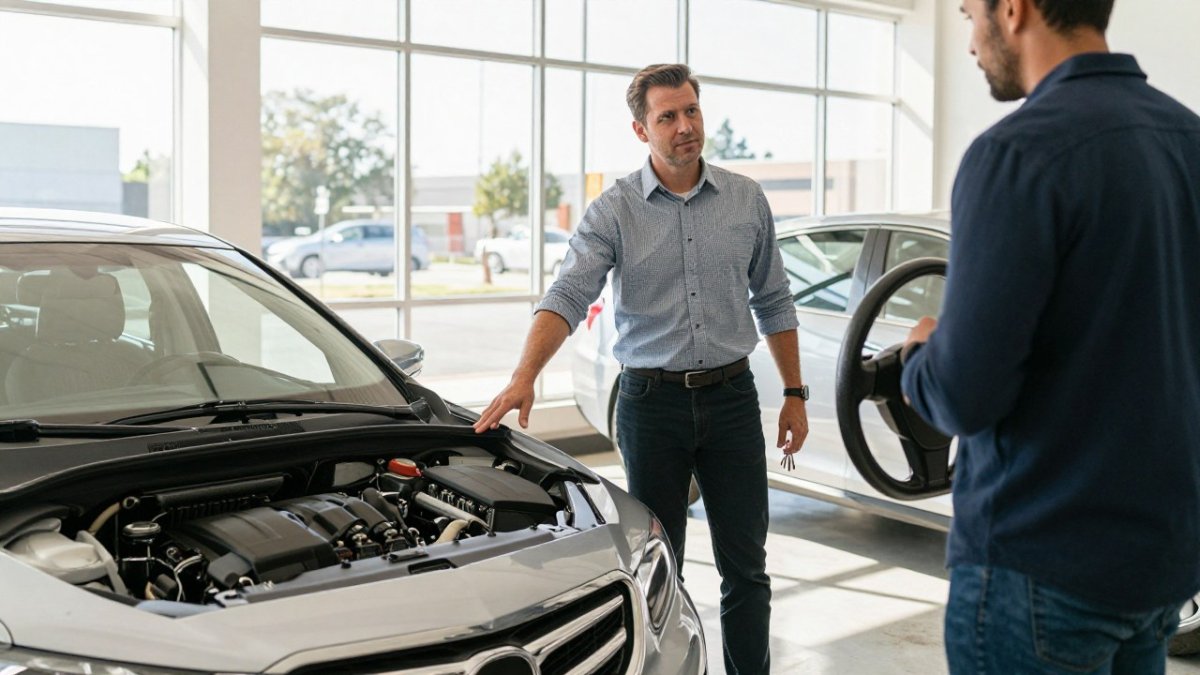
A thorough used car inspection involves a walk-around and test drive covering body, underbody, interior, tires, fluids, and warning lights before you discuss price.
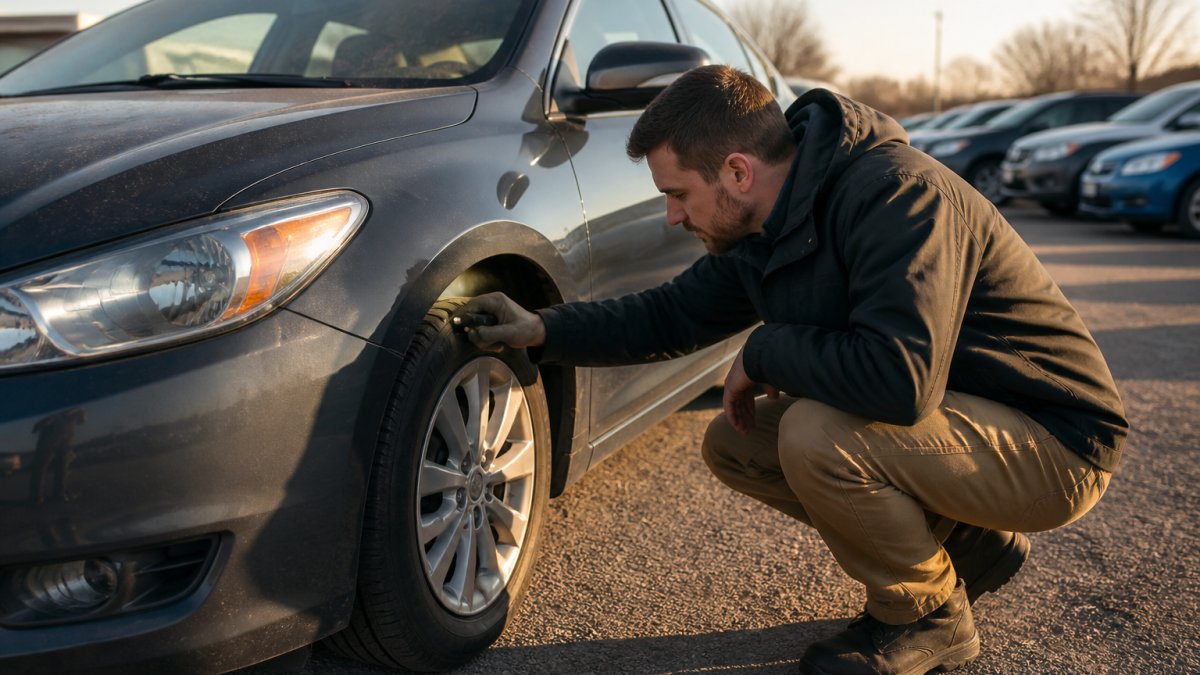
1. Body Panels, Paint, and Panel Gaps
Walk the car in good light. Mismatched paint, uneven panel gaps, and overspray hint at collision repair; a magnet reveals body filler.
2. Glass, Lights, and Safety Equipment
Check the windshield for cracks, test every light, and confirm seatbelts latch and retract.
3. Tires and Tread Depth
Uneven tire wear points to alignment or suspension trouble. Check tread depth and confirm all four tires match.
4. Underbody, Rust, and Fluid Leaks
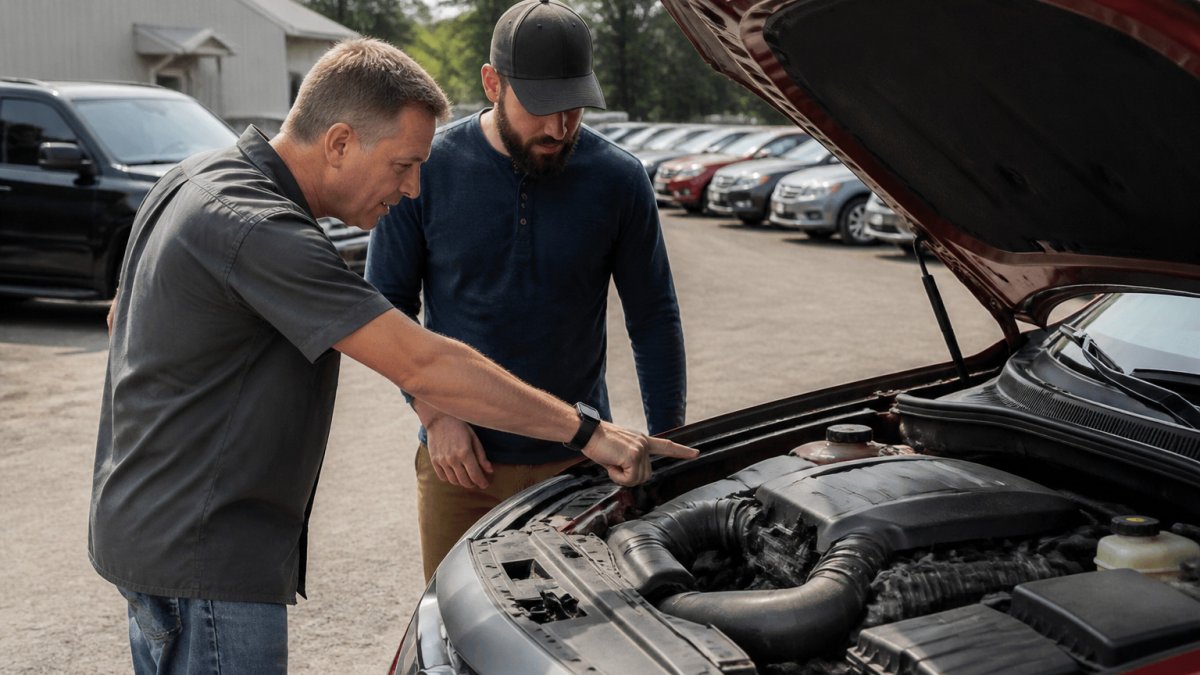
Look for rust on frame rails, brake lines, and exhaust; fresh fluid drips are a red flag. Check the engine bay for leaks.
5. Interior, Doors, Windows, Trunk, and Hood
Open and close every door, trunk, and hood. Test all windows, the key fob, and seat adjustments.
6. Engine, Transmission, and Warning Lights
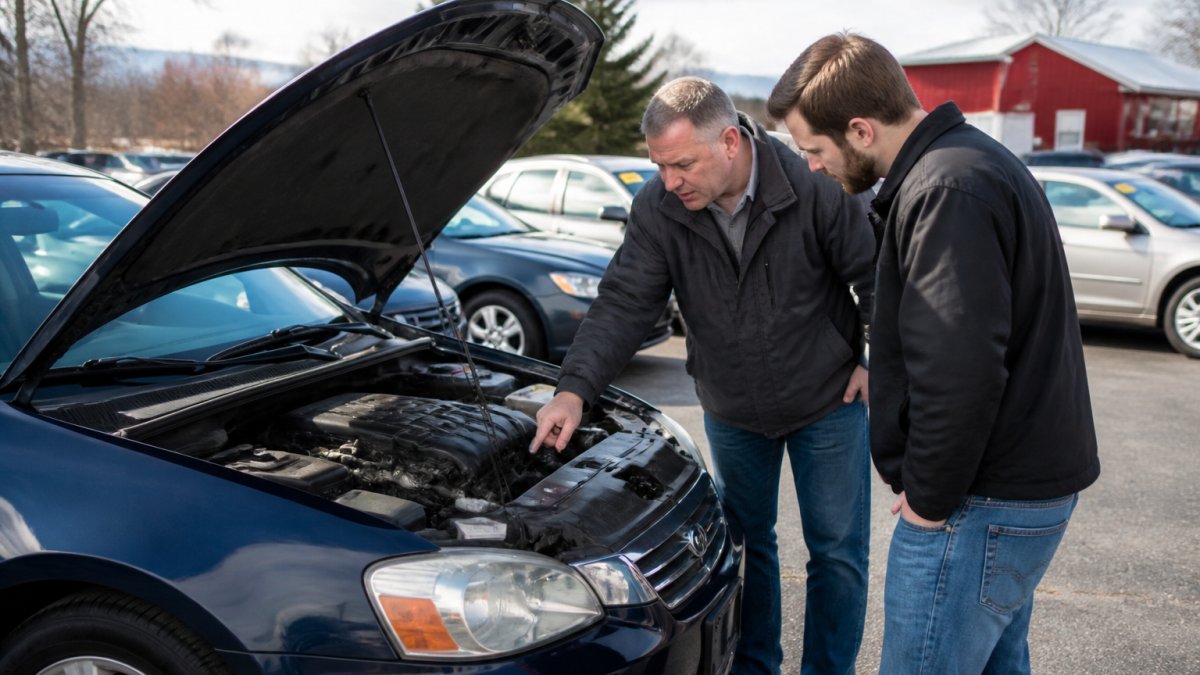
Start the engine cold if possible and listen for knocking or ticking. Warning lights should cycle on then go out; a check engine light that stays on needs a scan.
| Check | Time | Red Flag |
|---|---|---|
| Body and paint | 10 min | Mismatched paint, uneven gaps |
| Tires | 5 min | Uneven wear, mismatched brands |
| Engine and warning lights | 10 min | Knocking, check engine light |
Pull a Used Car History Report and Verify Ownership
A vehicle history report records title events, accidents, recalls, and service entries tied to a VIN. Run the VIN and look for salvage or rebuilt titles, flood damage, odometer rollback, and open recalls.
Verify ownership: the name on the title should match the seller's ID, and confirm there is no lien, or get a lien release in writing.
Use a Used Car Test Drive Checklist
A used car test drive checklist should cover mixed driving: city streets, highway, and a parking lot. Listen for noises and feel for hesitation.
Test acceleration, braking, steering for pull or vibration, transmission shifts, suspension over bumps, and the air conditioning, heat, and defroster. Afterward, check under the car again for fresh leaks.
Buying a used car in the Southern Tier means balancing condition, mileage, and budget. If the inspection raises questions, browse our current inventory at Hillside Motors. We work with multiple financing sources, including credit unions and Credit Acceptance, so buyers with good credit, limited history, or past financial trouble can explore used auto financing options. Financing is subject to lender approval. Visit us at 5231 W. Wolf Run Road in Campbell, NY, or apply online to get started.
Frequently Asked Questions
What is the most important thing to check when buying a used car?
Start with the vehicle history report and a mechanical inspection. The history report reveals accident damage, title problems, and odometer issues, while a mechanic can spot engine, transmission, and suspension problems a visual check misses. Then confirm the title is clean and matches the seller's name, and take a thorough test drive. Skipping any of these steps is how buyers end up with hidden damage or unexpected repair bills.
What are red flags when buying a used car?
Watch for mismatched paint or uneven panel gaps that suggest body repairs, rust on the underbody, a check engine light that stays on, and tires with uneven wear. A seller who refuses a pre-purchase inspection or can't produce a title in their name is a serious warning. Also treat a mileage reading that doesn't match the wear on pedals and seats as a reason to walk away.
Should I get a mechanic to inspect a used car before buying it?
Yes. A pre-purchase inspection by an independent mechanic is one of the best ways to catch problems a test drive won't show, including frame damage, fluid leaks, and worn suspension parts. Ask the seller for permission first, and get the results in writing. If a seller won't allow an inspection, that alone tells you something important about the vehicle.