 blog
Best Used SUV for Bad Weather: What to Look For
Last Updated: October 28, 2026
Quick Summary
The best used SUV for bad weather has good ground clearance, a solid traction system, and a size that fits your family and parking situation. Compact and midsize models often balance handling, fuel economy, and maneuverability well. Good tires matter most, since an all-wheel or four-wheel drive system alone won't stop a vehicle faster on ice.
- Look for good ground clearance, a solid traction system, and a size that fits your needs.
- Compact and midsize SUVs often balance handling, fuel economy, and maneuverability well.
- Check tread depth and age on the tires before anything else.
- Neither AWD nor 4WD stops a vehicle faster on ice, so good tires still matter most.
- Test drive on a wet or uneven road to reveal handling issues a parking lot cannot.
Table of Contents
- Choosing a Used SUV for Winter Driving
- AWD or 4WD: Which Drivetrain Handles Snow Best?
- How to Inspect a Used SUV Before Buying
- Frequently Asked Questions
Choosing a Used SUV for Winter Driving
Choosing the best used SUV for bad weather starts with knowing what you actually drive through. Snow, ice, and slush demand different things from a vehicle than a dry highway does.
Look for a used SUV with good ground clearance, a solid traction system, and a size that fits your family and parking situation. Compact and midsize models often balance handling, fuel economy, and maneuverability well. Full-size SUVs offer more passenger and cargo space, but they can be harder to control on icy roads. You can compare specific family-friendly used models to see which sizes suit winter driving.
Check the tires before anything else. A capable drivetrain on worn all-season tires still struggles to stop. Ask for the tread depth and age of the tires, and factor the cost of a set of winter tires into your budget. Specific drivetrain configurations require unique considerations when choosing winter tires to ensure the vehicle maintains traction on slick surfaces.
AWD or 4WD: Which Drivetrain Handles Snow Best?
All-wheel drive (AWD) is designed to send power to all four wheels automatically, which helps with grip when accelerating on slick pavement. Four-wheel drive (4WD) is typically a more rugged system that is often selected manually and suits deep snow and off-road conditions. Neither system stops a vehicle faster on ice, so good tires still matter most.
Winter tires can outperform either drivetrain when stopping and turning on cold, icy surfaces.
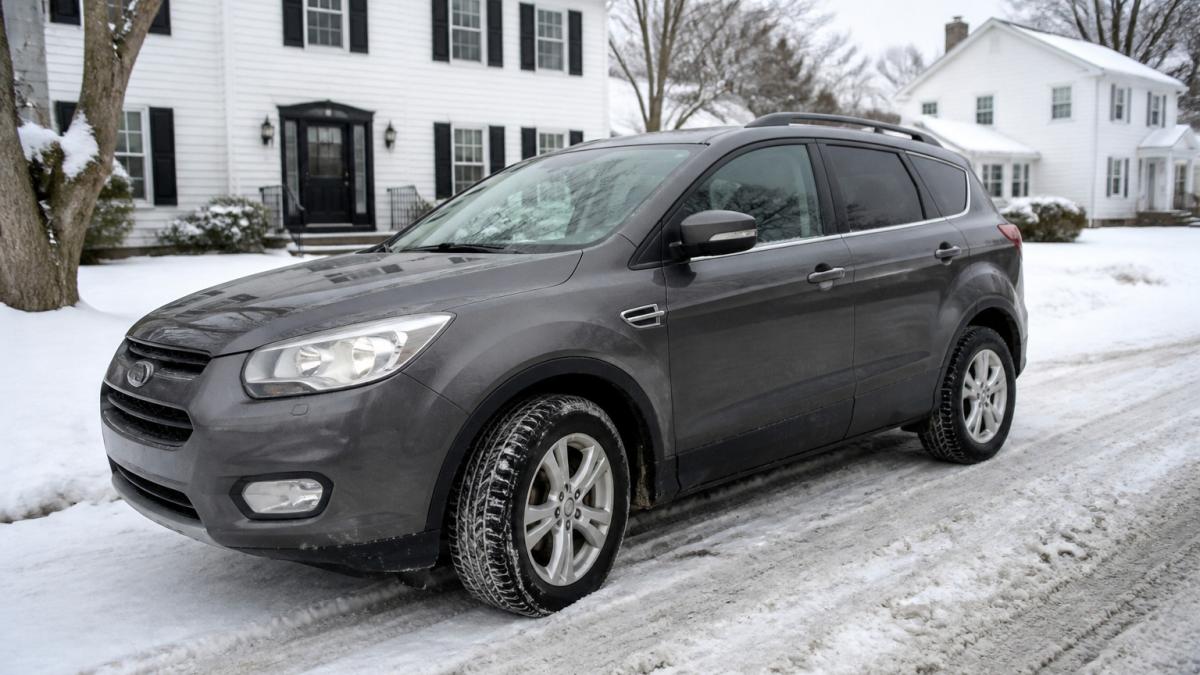
!A used SUV parked on a snow-covered residential street in upstate New York with winter tires visible on the wheels
How to Inspect a Used SUV Before Buying
Before you buy, inspect the tires, brakes, and underbody for wear, rust, and prior damage. Use this fuller pre-purchase checklist to cover every item before you commit. Ask for the service history and confirm that the drivetrain fluids have been maintained. A test drive on a wet or uneven road will reveal handling issues that a parking lot cannot.
Visit Hillside Motors to browse our used cars for sale or explore financing options that fit your budget. Financing is subject to lender approval.
Frequently Asked Questions
Is all-wheel drive or four-wheel drive better for snow?
Both systems send power to more than two wheels, which improves traction when accelerating on snow. Neither one shortens braking distance or improves steering grip. Winter tires do more to help you stop and turn on snow and ice than either drivetrain alone. For most drivers in the Southern Tier, a used SUV with AWD or 4WD and a set of good winter tires offers the best combination of traction and control.
Do winter tires matter more than all-wheel drive?
For stopping and turning, winter tires usually matter more. AWD helps a vehicle get moving, but tire grip determines how quickly it slows down and how well it holds a curve. Check the tread depth and age of the tires on any used SUV you consider, since worn all-season tires can reduce winter performance regardless of drivetrain.
What should I check when buying a used SUV for winter driving?
Look at the tire condition and tread depth, confirm the drivetrain works as listed, and check for rust on the frame, brake lines, and underbody. Ask for the service history and review it for regular maintenance. A pre-purchase inspection by a trusted mechanic can catch issues a quick walkaround will miss. Ask about the vehicle history before you commit.